Author: dompenton

  • Zones of Confidence: The Banana Incident

    Zones of Confidence: The Banana Incident

    The recent impressive volumes of regulated products that offer exposure to Bitcoin, such as ETFs, Microstrategy, and Bitcoin Miners, indicate that plenty of investors prefer “safe” or easy access to BTC.

    I was comfortable using a Trezor many years ago to move digital assets around. I even bought myself a digital banana to see how the NFT thing worked. The NFT purchase was complex, requiring many stages and significant gas fees. Then, Opensea seemed to lose my Banana, and I could not remember which wallet I had linked it to, let alone the seed phrases.

    While recovering my Banana (which may be on the rise after Justin Sun paid $6.2m for a real Banana and duct tape at auction), I soon realised my competence in self-custody had reverted to incompetence.

    For new investors buying a BTC ETF on your regular brokerage platform is much easier and less terrifying than sending money to a new “exchange” regulated somewhere you would like to go on holiday.

    Since the Banana incident, I have relied on trading platforms for custody of my crypto holdings.

    If digital assets are going mainstream, they have to be easier to deal with. The plumbing has to inspire confidence and allow users to reach unconscious competence.

    There are four stages of developing competence:

    Unconscious Incompetence

    The individual does not understand or know how to do something and does not necessarily recognise the deficit.

    Conscious Incompetence

    Though the individual does not understand or know how to do something, they recognise the deficit, as well as the value of a new skill in addressing the deficit.

    Conscious Competence

    The individual understands or knows how to do something. It may be broken down into steps, and there is heavy conscious involvement in executing the new skill. However, demonstrating the skill or knowledge requires concentration, and if it is broken, they lapse into incompetence.

    Unconscious Competence

    The individual has had so much practice with a skill that it has become “second nature” and can be performed easily. As a result, the skill can be performed while executing another task.

    Old Dog New Tricks: Self Custody

    I love a dystopian movie and the arguments against fiat money and financial freedom can justify the self-custody of digital assets.

    To get back in the zone, I bought the cool-looking iPod-esque Ledger Flex digital wallet. I was set up in twenty minutes and quickly transferred some coins from Coinbase. However, moving assets bought on tradfi trading platforms requires another leg I have yet to test. The device and interface have improved significantly, but I’m not yet convinced they are ready for mass adoption. As tradfi platforms add digital asset capabilities and the user experience improves, appetite will grow.

    Zhen Yu Yong, CEO of Web3Auth, discusses the views of Ethereum founder Vitalik Buterin vs Micro Strategy’s Michael Saylor.

    “Saylor argued that moving Bitcoin into the hands of regulated institutions provides a layer of security and legitimacy that self-custody may not. He believes that established financial entities, like BlackRock and Fidelity, are less likely to face government seizure or intervention owing to their integral roles in the economic system. Self-custody advocates raged and continue to argue that relying on third-party custodians centralises risk, weakens network security, and limits the development of advanced cryptographic features.”

    Zhen continues

    ‘While self-custody (holding your keys) offers absolute control over a user’s assets, it is often associated with a significant challenge — managing private keys can be overwhelming for many users, especially those new to Web3. Saylor is right about that.

    In the first half of 2024 alone, more than 70 new layer 1s were created, surpassing 50 new layer 1s in 2023. Combine that with countless more decentralised applications built on different chains, and users struggle to navigate and manage their assets. Siloed blockchains create a fragmentation issue across Web3. 

    New chains will further complicate the burden and complexity for users. The problem: Fragmentation means a poor user experience.”

    Read the full article here.

    Multichain self-custody is the future

  • 344 single-point failures

    344 single-point failures

    I highly recommend watching the superb documentary Unknown: Cosmic Time Machine to increase your appreciation of human achievement. šŸ›°ļø

    It follows a team of engineers and scientists on an ambitious mission to launch the James Webb Space Telescope (JWST) and the near impossibility of the project.

    How many single-point failures do you have around you?

    Landing on Mars: 90 – one of the hardest things to do
    James Web Telescope: 344 – the largest of any space mission (225 in the sun shield deployment)

    JWST design started in 1996, construction in 2004, testing in 2017 and final launch in 2021 for an estimated cost of US$10bn. Initial estimates were for launch in 2007 for a cost of US$500m.

    Post one test, NASA discovered critical fasteners did not work; the fix took six months and cost US$150m.

    The impossible was possible, and JWST produced the most detailed and deepest infrared images of the universe, capturing galaxies that formed just a few hundred million years after the Big Bang. 🌌

    Enjoy the images here:

    šŸ—ļø Back on Earth, we are surrounded by large, complex projects; almost all will be over budget and over time. To put some data around that assertion, read How Big Things Get Done: The Surprising Factors Behind Every Project’s Success (and Failure) by Bent Flyvbjerg, dubbed “the world’s leading megaproject expert” and Dan Gardner.

    The book dives into the challenges and lessons of delivering large-scale projects, from bridges and skyscrapers to tech rollouts and film productions. It explores why so many grand initiatives end up delayed, over budget, or failing altogether while also detailing what separates successful ones.

    In his dataset of 25 project types covering 16,000 projects, he details mean cost overruns and mean cost overrun if the project is in the tail of more significant overruns:

    Nuclear Storage: 258% – 427%
    Olympic Games: 157% – 200%
    IT: 75% – 447%
    Buildings: 62% – 206%
    Rail: 39% – 116%
    Wind Power: 13% – 97%
    Solar: 1% – 50%

    Good news for renewable energy, less so for Olympic host cities.

    The book argues that projects designed in modules—independent, manageable segments—are more likely to succeed. Modularity allows project parts to be completed in phases, tested, and adjusted without jeopardizing the entire project. Projects that lack this flexibility face higher risks when encountering unforeseen issues.

    🫵 The final words in the book: Know that your biggest risk is YOU and your behavioural biases and shallow thinking.

    😔 Recently, my fence contractor installed four new panels, three identical and the other not. Logic would suggest that all would be the same. Logic and competence aside, I could have included the words “identical panels” in the scope of work and been onsite to monitor progress.

    My work mantra has always been “only expect what you inspect”…so the failure could be mine. šŸ¤¦ā€ā™‚ļø

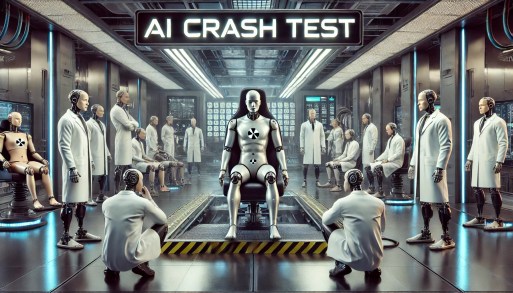
  • AI Crash Test Dummies

    AI Crash Test Dummies

    Increasingly, I use an AI tool every day, and the speed at which these products improve is extraordinary.

    My first exposure to AI was at a presentation by IBM in 2017 showcasing Watson. It gained fame in 2011 by beating humans playing Jeopardy, demonstrating its natural language processing and vast data retrieval capabilities. I watched an oncology and medical diagnostics demo, which ultimately proved very costly to implement. IBM exited Watson Health in 2021 and now focuses on hybrid cloud and enterprise AI.

    Fast forward to playing with Chat GPT beta and subscribing at launch. It feels like I have a front-row seat to another game-changing moment: Apple/Amazon/Space-X/YouTube/Google Search/Navigation/Social Media/Cloud Computing/Blockchain and Crypto.

    I’m not a super AI user, but the most significant change in my habits is using Perplexity for internet queries. I no longer Google it; I ask Perplexity questions. I like how the response is organised with simple access to sources.

    I use ChatGPT 4o daily for research, querying documents, marketing ideas and creating images for blog posts. I made my own GPT, the DataDrivenAdvisor, to help research and analyse investment opportunities. Creating your own GPT could not be simpler; just trial and error with designing what you would like the model to do.

    I was recently blown away by the podcast feature of Google Notebook LM, “Your Personalised AI Research Assistant”. Spookily lifelike humans discuss the documents and information uploaded.

    Fathom AI Notetaker is incredible for anyone taking notes of meetings and spits out accurate summaries and action points, an excellent time hack.

    AI agents are popping up everywhere. Most of the time, I would prefer the bot vs a human for simple requests. The smart people at Keepme.ai have delivered a powerful sales tool to deal with complex enquiries and help keep the sales funnel flowing.

    But the real positive upside to AI is to help solve the big problems. Here Dario Amodei sets out his vision. He is the co-founder and CEO of Anthropic, the company behind the large language model series Claude AI and previously the vice president of research at OpenAi

    Make yourself a cuppa and have a read.

    machines-of-loving-grace

    He believes “that most people are underestimating just how radical the upside of AI could be, just as most people are underestimating how bad the risks could be.”

    The five categories he is most excited about are:

    1. Biology and physical health: elimination of most cancers and prevention and cures for genetic diseases and Alzheimer’s. Doubling of human lifespan (no thanks)
    2. Neuroscience and mental health: curing most mental illnesses
    3. Economic development and poverty
    4. Peace and governance
    5. Work and meaning

    Here is a good example. Harvard Medical School has developed a ChatGPT-like AI model that can diagnose cancer, guide treatment choice, and predict survival across multiple cancer types.

    A New Artificial Intelligence Tool for Cancer | Harvard Medical School

    I like this optimistic vision of the future. However, the dark side of AI and wading through AI slop (the cousin of spam) will grab headlines.Ā Ā 

    I stay on top of the good, bad, and ugly in Tech and AI via the amusing Hard Fork Podcast from the New York Times.

    Written by me, a human, with some help from Grammarly.

  • Will Tokenisation eat traditional finance?

    Will Tokenisation eat traditional finance?

    If Bitcoin didn’t exist, would my life would be any different? Many of my intelligent, cynical friends can pose that question with confidence. So far, they have missed a significant investment return but have yet to witness a rewiring of the financial system. However, they pause when you go deeper into “What is Money?” and what would happen if you woke up and your central bank imposed capital controls? Veteran emerging market participants can recall a shopping list of countries that restricted the free flow of capital after the 1997 Asian Financial Crisis. In this regard, those of independent minds can embrace the financial freedom a transferable asset like Bitcoin can bring, let alone a potential hedge against fiat debasement. If you need to renew your faith, tune into Michael Saylor’s presentations or read The Ascent of Money by Niall Ferguson.

    Tokenisation – Financial Titans Make Their Move

    Over the last 24 months, I have been impressed by the significant financial brand names that appear on stage at conferences to discuss tokenisation. These institutions have scaled in my lifetime to be trusted custodians and manage trillions of dollars. But do end users care if the asset is an exchange-listed ETF, REIT, bond, stock, or a tokenised version? Perhaps if I can move the asset around freely and quickly, trade 24-7, use it as collateral, etc., everything should be tokenised.

    But do I trust the code enough to chance my arm in DeFi land?

    Oracles and trust provision are cornerstones in DeFi and Tradfi, with different definitions and mechanisms. Does tokenisationn by large financial institutions with legal and regulatory safeguards bring a wave of innovation (and cost savings to providers) or hobble the path to true financial nirvana?

    I expect that TradFi tokenisation efforts will co-opt the language and benefits of DeFi without embracing its fundamental principles. The term “tokenisation” will be widely used, but the deeper revolutionary goals of DeFi, such as democratising finance and eliminating middlemen, will be crowded out by the financial titans.

    Blackrock recently reported $11 trillion of AUM, and its BTC ETF tops the charts at US$23bn of net assets. More importantly, its tokenised money market fund (BUIDL) will likely be widely accepted as collateral and has grown quickly to a US$550m market cap.

    At a more retail consumer level, Wisdom Tree ( $103bn in assets) recently launched a visa card linked to customer digital asset accounts.

    ā€œThe WisdomTree Prime Debit Card is the first real step in being able to take your digital asset holdings and leverage them in day-to-day personal finance,ā€ said Will Peck, Head of Digital Assets at WisdomTree. ā€œWe built this app because we see inherent value in connectivity – having all of your assets in one place, where your crypto isn’t locked away and can sit alongside your other investments, like bond or equity exposures. Now, those assets can fund consumers’ daily purchases, giving them more choice in where their assets go, how assets are used, and how they can potentially grow over time.ā€

    There is plenty of room for both, and significant operational hurdles remain. However, the proliferation of competing protocols from the big banks and asset managers hardly fixes the cost, speed, and inefficiency problems the industry is trying to solve.

    Over forty financial firms have joined the Bank for International Settlements to explore how tokenisation can enhance wholesale cross-border settlements. Project Agora.

    My best guess is that hybrid systems aided by interoperability will emerge with the best permissioned and permissionless environments. The Titans do have a significant advantage with all the assets and customers but prefer to fly solo, which is where the innovation from the emerging players can catalyse real change.

    Either way, the digital asset/crypto community has to continue to build trust to bring credible innovation to financial markets.

    Down the rabbit hole:

    McKinsey has an excellent tokenisation summary here: https://www.mckinsey.com/industries/financial-services/our-insights/from-ripples-to-waves-the-transformational-power-of-tokenizing-assets  

    Wisdomtree highlights the advantages of tokenisaiton:

    WisdomTree highlights asset manager advantages inTokenisationn: usability – Ledger Insights – blockchain for enterprise

  • The State of Crypto, Blockchain and DeFi

    The State of Crypto, Blockchain and DeFi

    For much of the last last year, I have been immersed in the world of cryptocurrencies & blockchain applications. In particular, the convergence of traditional finance and blockchain. I met miners, math whizzes, old school finance people, BTC evangelists and a lot of coders (including a few hacktivists).

    Given the industry is moving at breakneck speed, it is time for a refresh.

    Early observations and my current view:

    1. Many “disruptive” blockchain projects would be fine with a simple permissioned database. You hear “blockchain is a solution looking for a problem” a great deal. – There are plenty of super smart and exciting projects out there, but no extinction just events yet. Have a look around R3 Corda, an enterprise blockchain for real-life projects in many sectors. . Huge sums of money are tied up in utility tokens and decentralised finance applications (DeFi).
    2. Institutional investors appetite for bitcoin and other digital assets was “at an inflection point”– While correlations with markets in March did not help BTC/Digital Gold bulls, infinite QE and considerable improvements in custody, fiat rails and trading security are making institutional participation much more straightforward. I suspect the inflection is already here.

    I’m mostly focused on cryptocurrency investment, exchanges, custody, lending, crypto funds and ultimately the widespread adoption of DLT and cryptocurrencies.

    Bitcoin and Blockchain Refresher (Thanks to CB Insights)

    Bitcoin’s blockchain technology allows for the creation of a unique and scarce digital asset where everyone knows the history of each particular bitcoin. A single bitcoin is not just a string of ones and zeros: it’s also the first successful (at least so far) censor-proof, portable, easily transactable, durable, and secure digital asset.

    Bitcoin’s value is subject to the same supply-and-demand mechanics found in any marketplace. If investors find the above characteristics valuable and demand for bitcoin grows, bitcoin’s price rises, and vice versa.

    Bitcoin’s supply is limited to 21M coins, although only about 18.5M have been mined so far. As of August 10, 2020, Bitcoin is valued at about $220B in aggregate.

    Blockchain technology faces scaling issues. Bitcoin can process about 4-5 transactions per second. Ethereum maxes out at about 25 transactions per second. Visa can process over 24,000 transactions per second.

    Protocols such as Ethereum & EOSIO aim to increase the speed of transactions significantly vs bitcoin.

    Digital Gold

    It is easy to focus on Bitcoin as it comprises approximately 60% of digital coin market cap, with Ethereum next at around 12%. Coinmarketcap suggests the total market cap of cryptocurrencies is $369bn, trading $84bn in a recent 24 hr period.

    During my years in Asia, each decent China equity rally was accompanied by a frankly ridiculous number of new retail brokerage account openings. Sometimes over 1m accounts were opened in one day! Crypto wallet installs could be a similar indicator.

    Crypto derivatives have grown significantly with new highs reached in futures and options on various exchanges. This would suggest interest from institutions and sophisticated investors is growing.

    The emergence of insured and credible custody (Bitgo, Fidelity, Gemini) and safe trading (Copper, Tagomi, Fireblocks) is, without a doubt, a considerable catalyst in further interest in digital assets. Liquidity providers such as B2C2 take much exchange pain away for bigger players. For investors/speculators still not keen to set-up trading accounts many tracker funds (Coinshares, Grayscale) and actively managed crypto-asset funds are available ( Nickel, Soldium)Ā 

    Perhaps this comment from Brian Armstrong, CEO of Coinbase late last year shows the trend is clear.

    “Whether institutions were going to adopt crypto or not was an open question about 12 months ago. I think it’s safe to say we now know the answer. We’re seeing $200-400M a week in new crypto deposits come in from institutional customers.”

    DeFi (Further thanks to CB Insights)

    Decentralised finance (DeFi) is an ecosystem of smart contracts that allows participants to offer and access financial services in a peer-to-peer format, without relying on traditional intermediaries like banks, credit unions, or brokerages.

    The MakerDAO is a decentralised lending protocol and one of the most popular DeFi dapps (decentralised applications). The protocol allows users to use ETH as collateral to borrow DAI, a digital token pegged to the dollar. The dapp allows investors to go long on ETH: users can spend the DAI borrowed to buy even more ETH, which can then be cycled back into the vault to borrow more DAI. This creates decentralised leverage — investors can bet on the price of ETH for only a small initial sum.

    A variety of dapps are being built to facilitate trading, banking, and investing solely through smart contracts. Compound, for example, allows users to earn interest or borrow crypto against collateral. Through Uniswap, users can swap tokens or provide liquidity and earn fees. With Augur, users can bet on real world events and earn payouts automatically based on the results.

    The DeFi space has been growing rapidly: the total value locked in DeFi increased by 10x since the start of 2020, to over US$7bn. Check out defipulse.

    Lending dapps dominate the space with huge numbers locked in. Aave ($1.5bn), Maker ($1.42bn) and compound ($782.9m)

    The remaining Ether is split between minor DeFi applications including decentralised exchanges and financial derivatives.

    DeFi Market Cap, estimating tokens associated with the DeFi phenomenon now have a combined market value of $12.7 billion.

    Can’t choose which one? Binance plans to offer “DeFi Index Perpetual Contracts,” listed on Binance Futures. The contracts will be denominated in the dollar-linked stablecoin tether, and offer traders leverage up to 50 times their money down.    

    The “fully synthetic derivative product enables greater access to decentralised finance,” Binance said in the release. Binance’s DeFi index consists of 10 tokens associated with DeFi, several of which rank among the year’s best performers. They include Chainlink’s LINK, Compound’s COMP, Kyber’s KNC, Aave’s LEND, ZRX’s 0x and MakerDAO’s MKR. 

    Meanwhile “old school DLT/Blockchain applications could be numerous: 

    1. Tokenised Real Estate: illiquid assets and siloed networks.
    2. Digital assets: Represent any asset or agreement.
    3. Supply chain: Inefficiencies in global value chains.
    4. Digital Identity: Massive vulnerabilities.
    5. Decentralised advertising: Trust and transparency.
    6. Insurance: Archaic end-to-end processes.
    7. Healthcare: Tracking IP, drug provenance, parent admin.
    8. Trade Finance: Opaque and fragmented industry.

    Outlier Ventures has a significant portfolio of companies pushing DLT/Blockchain to create the “next era of digital infrastructure”.

    A good example is Sovrin, an open-source project creating a global public utility for self-sovereign identity.

    The use case is compelling as they discuss here. “As hacks and breaches become commonplace, affecting millions of people around the world, self-sovereign identity (SSI) is quickly gaining traction among technology developers looking to gain an edge in the race toward web 3.0. This new type of decentralised identity brings control and security back into the hands of the individual. Unlike flawed centralised models, including some federated and siloed traditional data systems, which could become honeypots and security risks, SSI allows identity holders to communicate peer-to-peer with organisations, disrupting the status quo of online transactions.”

     I should not have to give all of my passport details to someone who may only require my date of birth. SSI allows me to control my digital identity and verify who I am in a secure way.

    If this all sounds to conceptual vs real world, you can find real value being created with the utility tokens connected to some of these projects. 

    Fetch AI just listed at $71m market cap. Polkadot, another recent listing has a cap of $5.4bn.

    DLT is real for sure…to be continued